Immersive Design
Zoo as a System
Redesigned the zoo experience using systems thinking and AR to enhance visitor engagement and learning. Focused on interactive navigation, educational touchpoints, and sustainable souvenirs.
Year :
2023
Industry :
Tourism & Heritage Experience
Client :
Academic Project
Project Duration :
4 weeks
OVERVIEW:
A systems thinking-led redesign of the Rajiv Gandhi Zoological Park experience, integrating AR-driven tools and sustainable souvenirs to improve visitor engagement, educational value, and operational flow.
🎯 Type: Academic, UX Research, Systems Thinking
📍 Location: Rajiv Gandhi Zoological Park, Katraj, Pune
🤝 Collaboration: With Ankit (MIT ID)
🕒 Duration: 4 Weeks
🛠️ Tools: Figma, Miro, Illustrator, Photoshop
🧠 Methods: Field Research, Journey Mapping, System Mapping, AR Prototyping

CHALLENGE:
Public spaces like zoos often lack interactive, informative, and accessible engagement touchpoints. Despite a rich ecosystem, the visitor journey at RGZP felt linear, outdated, and unmemorable—especially for children and students.
OUR APPROACH:
Using the Double Diamond Framework, we explored RGZP as a living system:
Discover: On-ground observations, stakeholder interviews (staff, visitors, vendors).
Define: Identified system-level gaps — including lack of AR guidance, low educational interactivity, and souvenir inefficiency.
Develop: Ideated solutions across physical and digital layers to create an interactive, educational experience.
Deliver: Prototyped and visualized touchpoints including an AR app, photobooth, and souvenir designs.
RESEARCH & SYSTEMS MAPPING:
We mapped stakeholders such as:
Visitors (students, families)
Staff (caretakers, ticketing, management)
Animals (health, engagement zones)
Government Bodies (forest dept., education)
We identified leverage points such as:
Visitor flow inefficiencies
Low child engagement
Lack of self-guided learning aids
KEY SOLUTIONS:
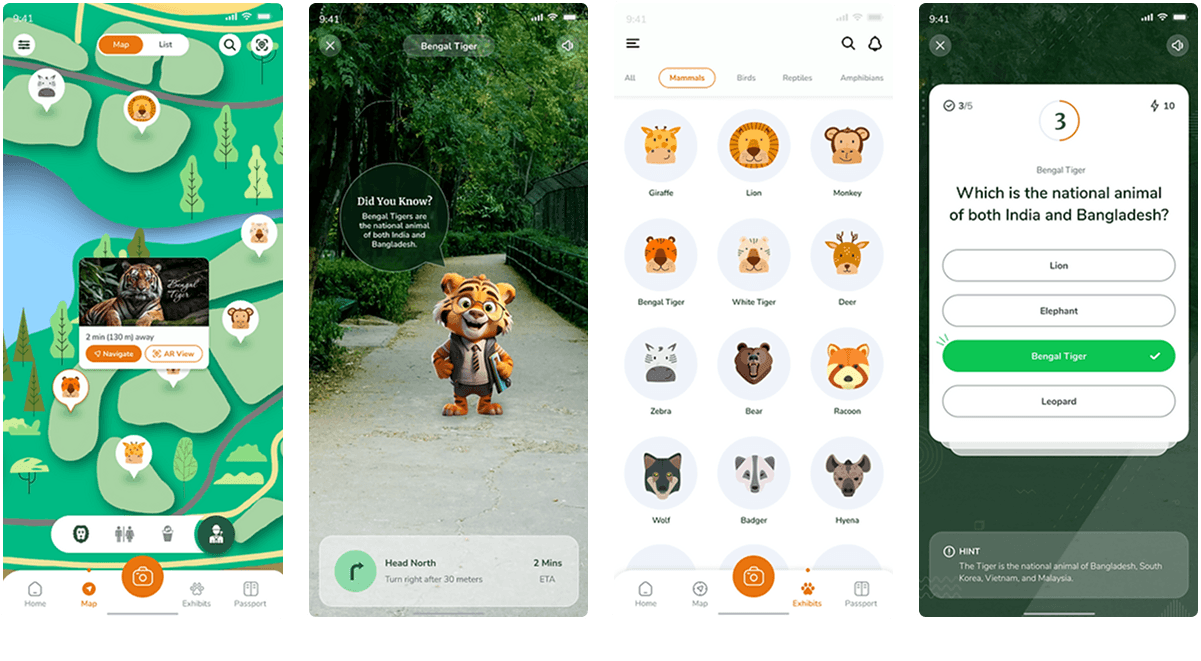
AR Zoo Mobile App
AR Navigation: Wayfinding through trails using markers or phone compass.
Interactive Animal Info: 3D animal visuals with facts, sounds, and quizzes.
AR Photobooth
Take home memories with life-sized AR animals and QR-enabled shareable photos.
Laser-Cut Souvenirs
Zoo mascot-inspired keychains and badges, doubling as learning prompts.
Designed for cost-effective local manufacturing.
Themed Drawing Competitions on Tickets
Community-driven events designed to engage local schools and increase repeat visits.
MY ROLE:
Co-led system mapping and stakeholder analysis
Conducted on-ground ethnographic research
Designed app wireframes and physical souvenir prototypes
Developed the conceptual UX flow for the AR experience
More Projects


Immersive Design
Zoo as a System
Redesigned the zoo experience using systems thinking and AR to enhance visitor engagement and learning. Focused on interactive navigation, educational touchpoints, and sustainable souvenirs.
Year :
2023
Industry :
Tourism & Heritage Experience
Client :
Academic Project
Project Duration :
4 weeks
OVERVIEW:
A systems thinking-led redesign of the Rajiv Gandhi Zoological Park experience, integrating AR-driven tools and sustainable souvenirs to improve visitor engagement, educational value, and operational flow.
🎯 Type: Academic, UX Research, Systems Thinking
📍 Location: Rajiv Gandhi Zoological Park, Katraj, Pune
🤝 Collaboration: With Ankit (MIT ID)
🕒 Duration: 4 Weeks
🛠️ Tools: Figma, Miro, Illustrator, Photoshop
🧠 Methods: Field Research, Journey Mapping, System Mapping, AR Prototyping
CHALLENGE:
Public spaces like zoos often lack interactive, informative, and accessible engagement touchpoints. Despite a rich ecosystem, the visitor journey at RGZP felt linear, outdated, and unmemorable—especially for children and students.
OUR APPROACH:
Using the Double Diamond Framework, we explored RGZP as a living system:
Discover: On-ground observations, stakeholder interviews (staff, visitors, vendors).
Define: Identified system-level gaps — including lack of AR guidance, low educational interactivity, and souvenir inefficiency.
Develop: Ideated solutions across physical and digital layers to create an interactive, educational experience.
Deliver: Prototyped and visualized touchpoints including an AR app, photobooth, and souvenir designs.
RESEARCH & SYSTEMS MAPPING:
We mapped stakeholders such as:
Visitors (students, families)
Staff (caretakers, ticketing, management)
Animals (health, engagement zones)
Government Bodies (forest dept., education)
We identified leverage points such as:
Visitor flow inefficiencies
Low child engagement
Lack of self-guided learning aids
KEY SOLUTIONS:
AR Zoo Mobile App
AR Navigation: Wayfinding through trails using markers or phone compass.
Interactive Animal Info: 3D animal visuals with facts, sounds, and quizzes.
AR Photobooth
Take home memories with life-sized AR animals and QR-enabled shareable photos.
Laser-Cut Souvenirs
Zoo mascot-inspired keychains and badges, doubling as learning prompts.
Designed for cost-effective local manufacturing.
Themed Drawing Competitions on Tickets
Community-driven events designed to engage local schools and increase repeat visits.
MY ROLE:
Co-led system mapping and stakeholder analysis
Conducted on-ground ethnographic research
Designed app wireframes and physical souvenir prototypes
Developed the conceptual UX flow for the AR experience
More Projects
Immersive Design
Zoo as a System
Redesigned the zoo experience using systems thinking and AR to enhance visitor engagement and learning. Focused on interactive navigation, educational touchpoints, and sustainable souvenirs.
Year :
2023
Industry :
Tourism & Heritage Experience
Client :
Academic Project
Project Duration :
4 weeks
OVERVIEW:
A systems thinking-led redesign of the Rajiv Gandhi Zoological Park experience, integrating AR-driven tools and sustainable souvenirs to improve visitor engagement, educational value, and operational flow.
🎯 Type: Academic, UX Research, Systems Thinking
📍 Location: Rajiv Gandhi Zoological Park, Katraj, Pune
🤝 Collaboration: With Ankit (MIT ID)
🕒 Duration: 4 Weeks
🛠️ Tools: Figma, Miro, Illustrator, Photoshop
🧠 Methods: Field Research, Journey Mapping, System Mapping, AR Prototyping
CHALLENGE:
Public spaces like zoos often lack interactive, informative, and accessible engagement touchpoints. Despite a rich ecosystem, the visitor journey at RGZP felt linear, outdated, and unmemorable—especially for children and students.
OUR APPROACH:
Using the Double Diamond Framework, we explored RGZP as a living system:
Discover: On-ground observations, stakeholder interviews (staff, visitors, vendors).
Define: Identified system-level gaps — including lack of AR guidance, low educational interactivity, and souvenir inefficiency.
Develop: Ideated solutions across physical and digital layers to create an interactive, educational experience.
Deliver: Prototyped and visualized touchpoints including an AR app, photobooth, and souvenir designs.
RESEARCH & SYSTEMS MAPPING:
We mapped stakeholders such as:
Visitors (students, families)
Staff (caretakers, ticketing, management)
Animals (health, engagement zones)
Government Bodies (forest dept., education)
We identified leverage points such as:
Visitor flow inefficiencies
Low child engagement
Lack of self-guided learning aids
KEY SOLUTIONS:
AR Zoo Mobile App
AR Navigation: Wayfinding through trails using markers or phone compass.
Interactive Animal Info: 3D animal visuals with facts, sounds, and quizzes.
AR Photobooth
Take home memories with life-sized AR animals and QR-enabled shareable photos.
Laser-Cut Souvenirs
Zoo mascot-inspired keychains and badges, doubling as learning prompts.
Designed for cost-effective local manufacturing.
Themed Drawing Competitions on Tickets
Community-driven events designed to engage local schools and increase repeat visits.
MY ROLE:
Co-led system mapping and stakeholder analysis
Conducted on-ground ethnographic research
Designed app wireframes and physical souvenir prototypes
Developed the conceptual UX flow for the AR experience